Daphne
READ MORE
READ LESS
Find out more at How to Grow Daphne
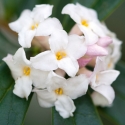
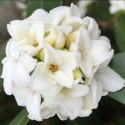
PAGE 1 ALL aka White Daphne or Daphne odora This very desirable Daphne has glossy green leathery foliage and tight clusters of creamy white blooms with a gorgeous fragrance. The blooms appear in late winter. Plant in semi-shade in nice rich soil, avoid Lime. Evergreen.
Daphne Leu. Alba 1yr Expected Stock Height: 30/40 cm ? New stock expected Beginning of July, 2024. Waitlist now. Estimated price $49.99. Payment on order.
Daphne O Leucanthe Alba 2yr Expected Stock Height: 30/45 cm ? New stock expected Beginning of July, 2024. Waitlist now. Estimated price $59.99. Payment on order.
Daphne Leu. Alba 2yr Expected Stock Height: 50/60 cm ? New stock expected Middle of July, 2024. Waitlist now. Estimated price TBA. Payment on order.
aka White Daphne This very desirable standard Daphne has glossy green leathery foliage and tight clusters of creamy white blooms with a gorgeous fragrance. The blooms appear in late winter. Plant in semi-shade in nice rich soil, avoid Lime. Evergreen.
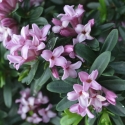
Daphne Leu. Alba Std Expected Stock Height: STD-60/HGT-100 ? This plant is in high demand and supply is limited this year. Add to your Waitlist for updates on next available stock. aka Daphne Daphne Spring Pink Eternal Fragrance is part of the new generation of Daphne breeding. This is a beautiful and hardy new selection. Like its award-winning counterpart, Eternal Fragrance, it is celebrated for its sun hardy nature. Plant it in full sun and enjoy its gorgeous pink blooms, exquisite fragrance and repeat flowering nearly all year round. Daphne EF Spring Pink Expected Stock Height: 40/50 cm ? New stock expected Beginning of July, 2024. Waitlist now. Estimated price $54.99. Payment on order.
aka Daphne What a delightful little 'must have' this Daphne is. Neat and tidy grey-green foliage and dainty white flowers that open from tight pink buds from spring right through to autumn. And of course is has a wonderful fragrance. Slow growing and compact. Happy in sun or part shade. Semi-evergreen. PVR.
Daphne Eternal Fragrance Expected Stock Height: 40/50 cm ? New stock expected Beginning of July, 2024. Waitlist now. Estimated price $54.99. Payment on order.
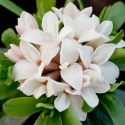
aka Pink Daphne or Daphne odora Pink Daphne. The popular upright Daphne having clusters of white to pink blooms with typical heady fragrance that Daphne is renowned for. Attractive dark green foliage that offsets the flowers. Suits a dappled light spot. Evergreen. H1m. Daphne Leucanthe 1yr Expected Stock Height: 35/45 cm ? New stock expected Beginning of July, 2024. Waitlist now. Estimated price $49.99. Payment on order.
Daphne Leucanthe 2yr Expected Stock Height: 40/50 cm ? New stock expected Beginning of July, 2024. Waitlist now. Estimated price $59.99. Payment on order.
Daphne O Leucanthe 2yr Expected Stock Height: 50/60 cm ? New stock expected Middle of July, 2024. Waitlist now. Estimated price TBA. Payment on order.
aka Upright Daphne Who doesn't love the smell of Daphne? This gorgeous evergreen shrub has flowers that emit one of best fragrances Mother Nature ever created. Glossy green foliage and clusters of pink and white blooms from late winter to early spring. Prefers semi-shade, good drainage and lime free soil.
Daphne O Leucanthe Std Expected Stock Height: STD-50/HGT-100 ? This plant is in high demand and supply is limited this year. Add to your Waitlist for updates on next available stock. A great new hybrid with larger flowers than many of its contemporaries, its scent is divine! Leaves are lustrous and dark green, so will add structure and form all through the year. Its perfect for a partially shady border, or a woodland garden. Evergreen Daphne Perfume Princess Current Stock Height: 30/40 cm ? Container: 2.5l ? $44.99 This hybrid has larger white flowers than many of its contemporaries, and their scent is divine! Stems cut for the vase will fill the room with their perfume. Mainly evergreen the leaves are lustrous and dark green, so will add structure and form all through the year. Evergreen Daphne Perfume White Current Stock Height: 25/35 cm ? Container: 2.5l ? $44.99
Your Daphne will do well if you avoid root disturbance. They generally prefer semi-shade and cool lime free soil with good drainage. If you do not have just the right spot in the garden plant one in a container and place where you will enjoy the delicious perfume.
Habit: Upright
Mature Size 7-10 yrs (HxW): 100cm x 100cm
Your Daphne will do well if you avoid root disturbance. They generally prefer semi-shade and cool lime free soil with good drainage. If you do not have just the right spot in the garden plant one in a container and place where you will enjoy the delicious perfume.
Habit: Upright
Mature Size (HxW): Standard
PVR:
Habit: Bushy
Mature Size 7-10 yrs (HxW): 60cm x 90cm
Depending on temperature this Daphne may shed some leaves therefore it is known as semi-evergreen. As the growth habit is slow and compact this Daphne would be happy in a container which you could position in order to maximize the lovely fragrance.
PVR: BLAfra SHM293
Habit: Compact
Mature Size 7-10 yrs (HxW): 60cm x 90cm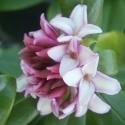
Mature Size (HxW): 100cm x 100cm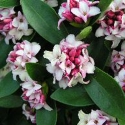
Habit: Upright
Mature Size (HxW): Standard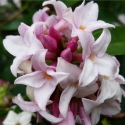
Perfume Princess is the largest and longest flowering of all Daphne and will tolerate full sun.
PVR: 32735
Habit: Bushy
Mature Size (HxW): 1.5m x 1m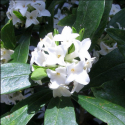
Just perfect for a partially shady border, or a woodland garden.
PVR: 34246
Habit: Bushy
Mature Size 7-10 yrs (HxW): 1.5m x 1m
Wairere Nursery
826 Gordonton Road, R D 1, Hamilton 3281 Ph: (07) 824 3430 Email: